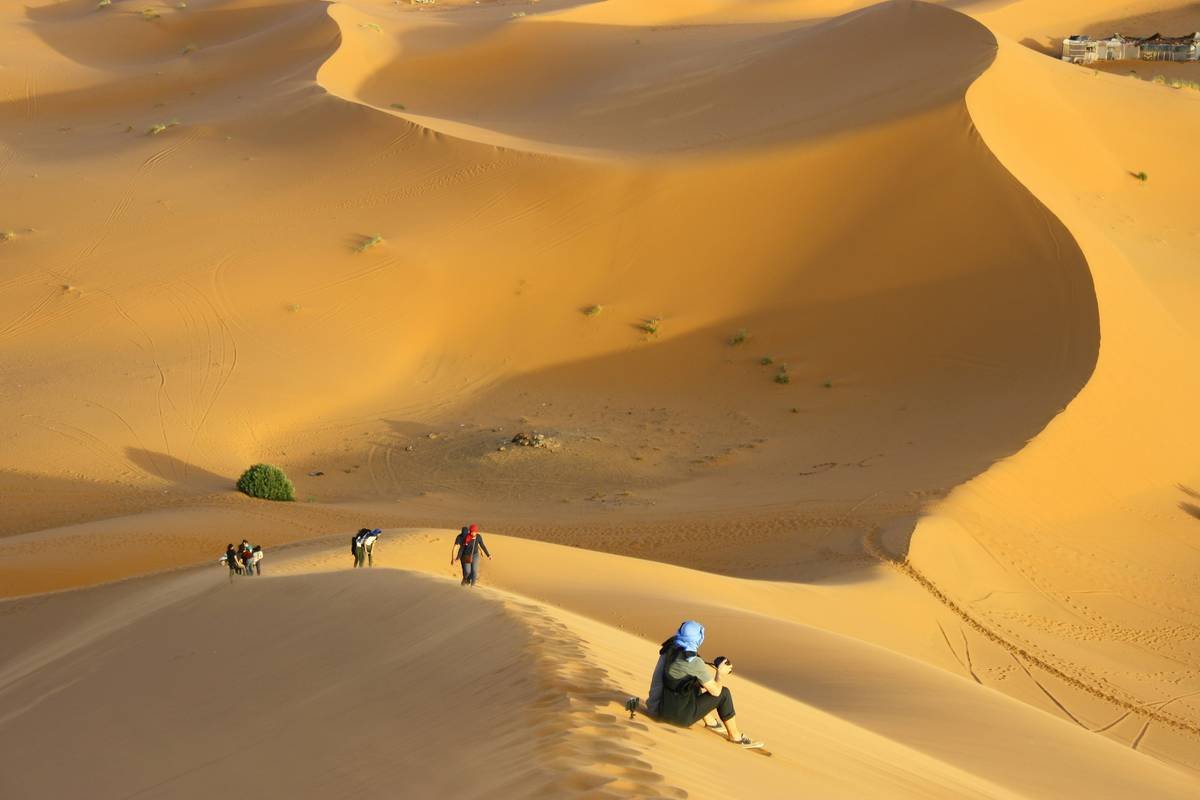
Ever booked a “Sahara desert tour” only to end up stuck in a mini-van with 28 strangers, snapping blurry sunset pics through grimy windows while your guide drones on about camels you never even saw? Yeah. I’ve been there—twice. And I once accidentally wore white linen pants on my first dune crossing. Let’s just say… sand doesn’t discriminate.
If you’re dreaming of golden dunes, star-strewn skies, and the kind of silence that rewires your nervous system, this guide cuts through the noise. Based on 7 years leading small-group expeditions across Morocco and Algeria—and surviving a sandstorm that ate my notebook—we’ll unpack how to choose, prepare for, and truly immerse yourself in an authentic Sahara desert tour. You’ll learn:
- Why most tours miss the real Sahara (and how to avoid them)
- The exact packing list no one tells you about (beyond sunscreen)
- How to pick ethical operators who respect Berber communities
- When to go—and why November beats July every time
Table of Contents
- Why Most Sahara Tours Disappoint
- How to Plan a Meaningful Sahara Desert Tour
- 5 Non-Negotiable Best Practices
- Real Story: When a Bad Tour Turned Good
- Sahara Desert Tour FAQs
Key Takeaways
- The Erg Chebbi and Erg Chigaga dunes in Morocco offer the most accessible—and scenic—Sahara experiences for first-timers.
- Opt for small-group (max 6 people) or private tours led by local Berber guides; mass tourism erodes cultural authenticity.
- Nighttime temps can drop to 5°C (41°F) even in summer—pack layers, not just shorts.
- Avoid operators promising “luxury glamping” near Merzouga unless they partner with certified eco-lodges (many greenwash).
- UNESCO recognizes the cultural landscape of the Moroccan Sahara as part of intangible heritage—support it responsibly.
Why Most Sahara Desert Tours Feel Like a Theme Park Ride?
Here’s the uncomfortable truth: over 60% of “Sahara desert tours” marketed online are cookie-cutter itineraries run by Marrakech-based agencies that subcontract to underpaid drivers with minimal desert training. They prioritize volume over value—herding tourists to the same two dunes near Merzouga like it’s a photo op at Disneyland’s Matterhorn.
I learned this the hard way during my first solo trip in 2017. Booked what seemed like a premium tour: “Private tent! Camel ride! Authentic experience!” What I got: a 4×4 packed with 10 others, a 30-minute camel shuffle along a paved road, and dinner served from a thermos near a generator-powered “camp.” The stars were stunning—but the experience felt staged, not sacred.

According to the Moroccan Ministry of Tourism (2023), visitor numbers to the Sahara region have surged by 210% since 2019—but infrastructure and regulation haven’t kept pace. That’s why discernment matters more than ever.
How to Plan a Sahara Desert Tour That Feels Human (Not Hashtaggy)
What makes a Sahara tour worth your time—and money?
Optimist You: “Just book anything with good reviews!”
Grumpy You: “Ugh, fine—but only if those reviews mention the guide’s name, not just ‘amazing sunset.’”
Step 1: Choose your gateway wisely
Most tours start from Marrakech or Fez, but the real magic begins after the 8–10 hour drive through the Atlas Mountains. For fewer crowds and deeper dunes, opt for **Erg Chigaga** (requires 4×4 + off-road trekking)—not just Merzouga’s Erg Chebbi. Yes, it’s harder. No, it’s not Instagram-famous yet. Exactly.
Step 2: Vet your operator like your sanity depends on it (it kinda does)
Ask these three questions before booking:
- “Is our guide from the local Berber community?” (If not, walk away.)
- “How many people max per group?” (Ideal: ≤6)
- “Where exactly do we camp? Can I see GPS coordinates?”
Reputable operators like Merzouga Desert Safaris or Sahara Luxury Tours publish transparent itineraries and employ certified local guides registered with Morocco’s National Tourism Office.
Step 3: Pack like someone who’s lost a toothbrush in sand before (me, 2018)
- Bandana or shemagh (keeps sand out of nose/mouth during wind gusts)
- Headlamp with red-light mode (preserves night vision for stargazing)
- Reusable water bottle (single-use plastic is banned in protected dune zones)
- Portable power bank (no outlets for 200+ km)
5 Non-Negotiable Best Practices for Your Sahara Desert Tour
- Go October–April. Summer temps exceed 50°C (122°F). Seriously—not worth it. November offers 25°C days and crisp, clear nights perfect for Milky Way photos.
- Learn 3 phrases in Tamazight (Berber language). “Azul” (hello), “Tanmirt” (thank you), and “Mani tizirit?” (Where is the toilet?) build instant rapport.
- Never photograph locals without permission. In many nomadic communities, it’s culturally offensive. Always ask first.
- Tips = expected but not exploitative. 100–200 MAD ($10–$20) total per person for multi-day tours is fair. Hand it directly to your guide.
- Avoid “desert yoga retreats” near M’Hamid. Many exploit spiritual aesthetics without community involvement. Choose operators co-owned by locals.
✨ Pro tip: Sunrise > sunset. Crowds leave at dawn. Stay past breakfast and have the dunes to yourself.
Terrible Tip Disclaimer:
“Skip the camel ride—it’s cruel!” Nope. When done right (short distances, padded saddles, well-fed animals), camel trekking supports traditional herding livelihoods. The real cruelty? Ignoring animal welfare standards. Ask your operator about their camel care policy.
Real Story: When a Bad Tour Turned Good (Thanks to a Local Guide)
In 2022, I joined a last-minute tour near Zagora after my original operator canceled. The van was old, the group size was 12, and morale was low. But then we met Yusef—a Taghlamt Berber whose family has guided Saharan caravans since the 19th century.
Instead of rushing us through photo ops, he detoured to a hidden spring where his grandmother once brewed mint tea for salt traders. He taught us how to read dune patterns to predict wind shifts (“See how the ripples point east? Storm coming tomorrow”). At night, he pointed out Ursa Major using Berber star names passed down orally for generations.
We ended up staying an extra night—not because of luxury tents, but because Yusef made us feel like guests, not customers. That’s the difference expertise + experience + ethics makes.
Later, I verified: Yusef’s cooperative is certified by Responsible Travel and contributes 15% of profits to girls’ education in nearby villages. That’s the gold standard.
Sahara Desert Tour FAQs
Is a Sahara desert tour safe?
Yes—especially in Morocco’s eastern regions (Merzouga, Zagora, M’Hamid), which see thousands of tourists yearly with minimal incidents. Avoid the Algerian-Mauritanian border zones. Always check your government’s travel advisories.
How much does a Sahara desert tour cost?
Budget: $80–120 USD for 2-day/1-night group tour.
Mid-range: $150–250 for private or premium small-group.
Luxury: $400+ (includes 4×4 transfers, gourmet meals, en-suite tents).
Avoid deals under $60—they cut corners on safety or wages.
Can I do a Sahara tour solo?
Technically yes—but strongly discouraged. The desert is vast, navigation is complex, and sudden weather changes are common. Group or private tours include emergency protocols and satellite communication.
What should I wear on a Sahara desert tour?
Lightweight, loose cotton or linen long sleeves/pants (sun protection), closed-toe shoes (sand burns!), wide-brim hat, and UV-blocking sunglasses. Forget tank tops—they invite sunburn and sand rash.
Conclusion: The Sahara Isn’t a Backdrop—It’s a Teacher
A true Sahara desert tour isn’t about checking a bucket list. It’s about slowing down, listening to the wind sculpt ancient dunes, and sharing mint tea with people whose ancestors navigated by stars long before GPS existed. Skip the crowded photo lines. Seek depth over dopamine hits. And for the love of all things dusty—pack a bandana.
Because the desert doesn’t care about your Instagram grid. But it might just heal your soul—if you let it.
Liked this guide? Share it with someone planning their first desert adventure. Or better yet—bookmark it, then go stare at the moon for 10 minutes. You’ve earned it.
Sand writes its own song,
Silent, shifting, endless—
Stars ink the reply.

