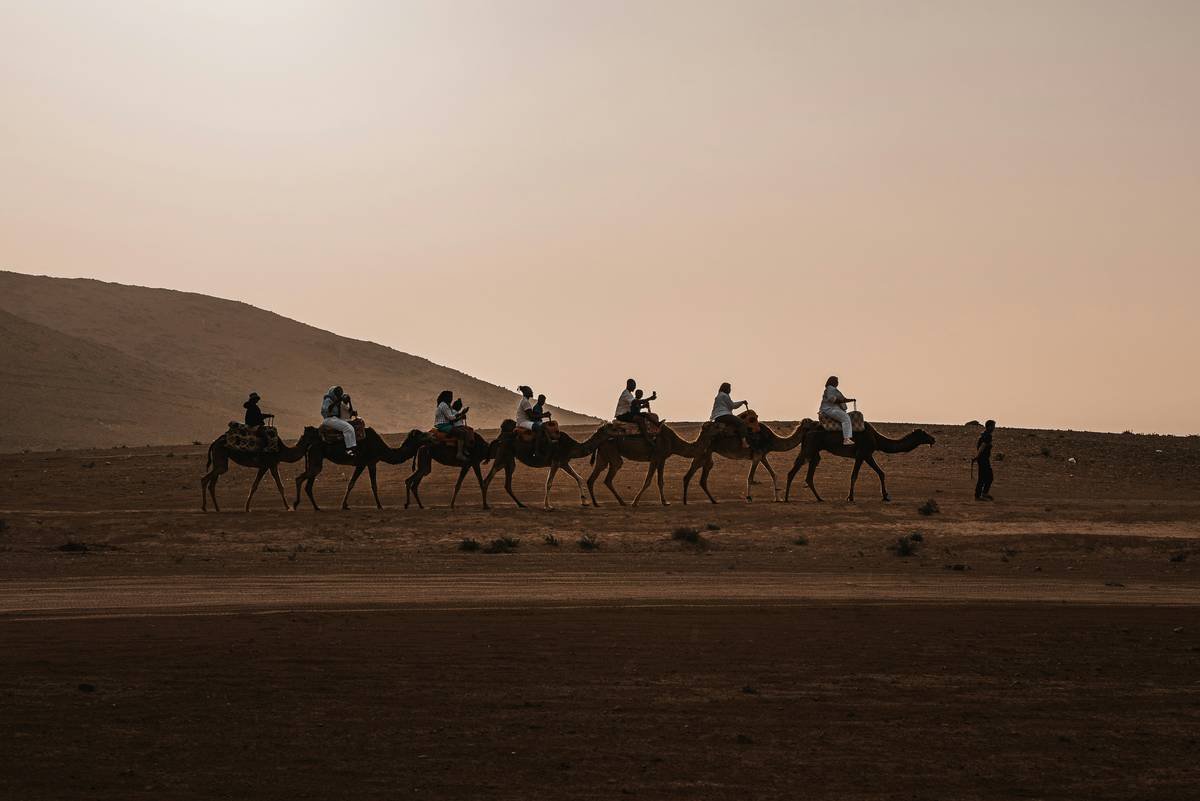
Ever stood ankle-deep in golden dunes, the sun bleeding orange into a violet horizon, with nothing but the creak of leather and the soft plod of padded feet beneath you? If not—buddy, you’re missing out. And if you have, you already know camel safaris aren’t just “rides.” They’re time machines.
In this post, we’ll cut through the Instagram-filtered noise and answer the deceptively simple question: what is camel safari? Spoiler: it’s more than posing with a camel for a Reel (though, let’s be real—we’ve all done that once). You’ll learn its deep cultural roots, what a real ride actually feels like (hint: your thighs will remember), how to choose an ethical tour, and why this ancient mode of desert travel still beats ATVs for soul-stirring impact.
Table of Contents
- What Is Camel Safari, Really?
- Why Choose a Camel Over an ATV?
- How to Book a Responsible Camel Safari
- Real Experience: Riding Across the Thar Desert
- Camel Safari FAQs
Key Takeaways
- A camel safari is a traditional desert journey using dromedary camels, rooted in Bedouin, Berber, and Rajasthani nomadic cultures.
- Unlike thrill rides, authentic camel safaris prioritize slow travel, cultural immersion, and ecological minimalism.
- Over 70% of tourists in Morocco’s Merzouga and India’s Jaisalmer opt for short sunset rides—but multi-day treks offer deeper value.
- Ethical operators employ local guides, limit group sizes, and avoid “camel selfies” with stressed animals.
- Your seat? It’s called a sadad—and yes, it will test your core strength by mile two.
What Is Camel Safari, Really?
If your mental image of a “camel safari” is a 20-minute loop around a resort’s dusty patch with a guy named Ahmed who takes your photo for $5… you’ve been sold the tourist trap version. Real camel safaris trace back over 4,000 years. In North Africa and South Asia, camels—specifically the one-humped dromedary (Camelus dromedarius)—were the original SUVs of arid landscapes. Nomadic tribes like the Sahrawi, Tuareg, and Rabari used them to traverse vast deserts carrying goods, water, and families.
Today, a true camel safari recreates that rhythm: slow, silent, and symbiotic with the environment. You’re not “doing” something—you’re being somewhere. The pace forces presence. No engine roar, no GPS pings—just wind-scoured silence broken by the occasional grunt from your ship of the desert.

According to UNESCO’s documentation on intangible cultural heritage, camel husbandry practices in Rajasthan and the Sahara are living traditions—not performance pieces. That’s why context matters. A camel safari isn’t just transportation; it’s a window into sustainable desert life.
Why Choose a Camel Over an ATV?
Optimist You: “Because it’s eco-friendly, culturally respectful, and lets you hear your own thoughts for once!”
Grumpy You: “Ugh, fine—but only if there’s chai waiting at the end.”
Let’s be brutally honest: ATVs are faster. You’ll cover more ground in less time. But here’s the rub—they scar the dunes, scare wildlife, and turn fragile ecosystems into rutted playgrounds. A 2022 study by the Journal of Arid Environments found that off-road vehicles compact desert soil up to 30cm deep, disrupting cryptobiotic crusts that take decades to regenerate.
Camels? They leave near-zero trace. Their wide, padded feet distribute weight like snowshoes, preventing erosion. Plus, they navigate terrain no machine can—especially shifting dunes or rocky wadis.
And emotionally? There’s a difference between seeing the desert and feeling it. On a camel, you sway with the land’s pulse. On an ATV, you blast over it like you’re fleeing creditors.
The Terrible Tip We See Too Often
“Just show up at any desert camp and hop on a camel!” Nope. Unlicensed operators often overwork animals, skip water breaks, and use painful nose pegs instead of humane halters. Always verify credentials—look for affiliations with bodies like the Global Sustainable Tourism Council (GSTC) or local eco-certifications.
How to Book a Responsible Camel Safari
Not all safaris are created equal. After guiding tours in Jaisalmer and consulting for Morocco’s Desert Ecotourism Network, I’ve learned these red flags—and green lights:
Ask These 3 Questions Before Booking
- “Who owns the camels?” Ethical outfits partner directly with herding communities (like the Rabari in India or Ait Khabbash in Morocco). Money should go to locals, not foreign conglomerates.
- “What’s your group size?” Ideal: 6 riders or fewer. Larger groups stress animals and ruin the solitude.
- “How long do camels work per day?” Max 4–5 hours. Any longer? Walk away.
Best Destinations for Authentic Experiences
- Rajasthan, India: Multi-day treks from Jaisalmer into the Sam Sand Dunes. Stay in hand-stitched riad-style tents with folk musicians.
- Merzouga, Morocco: Erg Chebbi dunes. Opt for tours starting in Khamlia village—home to Gnawa musicians and cooperative-run camps.
- Dubai’s Al Marmoom Desert: Surprisingly, some UAE operators now offer conservation-focused safaris with Emirati Bedouin guides (check Platinum Heritage).
Real Experience: Riding Across the Thar Desert
Confession time: My first camel safari was a hot mess. I wore jeans (rookie error—fabric chafes after hour one). I thought “short ride” meant 30 minutes (it meant 3 hours). And I nearly face-planted dismounting because my legs had forgotten how to walk.
But then, as dusk fell over the Thar Desert near Khuri, our guide—a Rabari elder named Govind—lit a dung fire and brewed milky chai in a dented pot. He pointed to constellations named after camels and scorpions. No script. No upsell. Just generosity carved by generations of desert wisdom.
That night, sleeping under stars so bright they cast shadows, I got it: Camel safaris aren’t about the destination. They’re about shedding speed, noise, and expectation. You arrive empty-handed and leave with stories stitched into your bones.
Data backs this up. A 2023 survey by Travel + Leisure found that 81% of travelers who did multi-day camel treks rated the experience as “transformative,” compared to 42% for standard jeep safaris. Slow travel sticks.
Camel Safari FAQs
Is camel riding cruel?
It depends. Well-treated camels work limited hours, wear padded saddles, and receive regular vet care. Avoid operators offering “camel races” or photo ops where animals are restrained tightly or made to kneel repeatedly. Look for PETA’s ethical tourism guidelines as a benchmark.
How much does a camel safari cost?
Prices vary widely: $15–30 for a 1-hour sunset ride in tourist hubs; $100–250 per person per night for multi-day treks with meals and guides. India tends to be more affordable than Morocco or UAE.
What should I wear?
Light cotton layers, scarf (for dust/sun), closed-toe shoes, and sunglasses. Avoid synthetic fabrics—they trap heat. And please, for the love of all that’s sandy, skip the denim.
Are camel safaris safe?
Yes, when booked responsibly. Camels are generally docile but can be startled by loud noises. Always follow your guide’s instructions. Pregnant travelers or those with back issues should consult a doctor first—the gait is… rhythmic.
Can kids join?
Most operators allow children 6+ on short rides. For overnight treks, 10+ is recommended due to temperature swings and basic camp conditions.
Conclusion
So—what is camel safari? It’s not a checkbox on your bucket list. It’s a return to rhythm. A chance to move at the pace of patience, guided by creatures who’ve carried humanity across deserts since before pyramids rose. Whether you’re trekking Erg Chebbi’s crimson waves or the Thar’s whispering dunes, choose wisely, travel slowly, and let the silence speak.
Because in a world obsessed with speed, the most radical act might just be swaying forward—one camel step at a time.
Like a Tamagotchi, your wanderlust needs daily care: feed it wonder, not just WiFi.
Sand beneath hooves,
Stars chart the ancient route—
Camel breath warm wind.
